
Timeline

Project Status & Information

Targets
Capacity Development
Results (June 2025 )

Background
The Village Sustainability Plans (VSP) Project, financed under the Guyana REDD+ Investment Fund (GRIF) with a dedicated budget of USD 3,464,285, represents a transformative investment in grassroots climate justice and participatory development across Guyana’s Amerindian and hinterland communities.
Signaling a strong commitment to village-level climate investment, this project continues to deliver essential technical assistance, training, and coordination at the national level while also helping individual villages turn plans into actionable initiatives. Whether through piloting small-scale resilient infrastructure and sustainable agriculture interventions or advancing eco-tourism and other community-driven livelihood activities, this initiative has been empowering villages to craft and execute their own sustainability strategies. At the core of this investment, the communities are positioned to initiate and lead growth strategies that embed their local priorities for driving social and economic progress, natural resource management, and local infrastructure. All the while, the VSP ensures alignment with broader national climate and forest goals upheld under Guyana’s Low Carbon Development Strategy (LCDS 2030).
The VSP initiative directly supports Amerindian villages in preparing and implementing these plans while building the technical and institutional capacity of the National Toshaos Council (NTC), village councils, and the Ministry of Amerindian Affairs. By doing so, the project strengthens governance systems, advocacy and representation enabling the communities to manage and chart their own sustainable development trajectories. The project’s main objectives are:
- Support Amerindian villages in preparing and implementing actionable sustainability plans.
- Build technical and institutional capacity of the NTC, village councils, and the Ministry of Amerindian Affairs.
- Promote inclusive participation of women, youth, and vulnerable groups in planning and decision-making.
- Enhance access to climate finance and sustainable livelihood opportunities for communities.
The project has several expected Outcomes, where participating villages are expected to:
- Be equipped to undertake long-term sustainability planning and implementation.
- Benefit from a monitoring, evaluation, and learning system to ensure continuous improvement.
- Experience stronger collaboration between communities, government agencies, and development partners.
- Demonstrate greater environmental stewardship and resilience across Amerindian communities.
The VSP ensures that Indigenous villages are empowered to lead their own sustainable development in harmony with Guyana’s LCDS 2030, translating global climate ambitions into locally meaningful pathways.
Impact
Over time, the VSP Project is anticipated to generate far-reaching impact: increased equity in benefit sharing from REDD+ revenues, strengthened community resilience, improved natural resource stewardship, and deeper trust in participatory governance mechanisms. By leading their own development trajectories, villages can implement locally appropriate growth strategies that enhance social, environmental, and economic outcomes.
The VSP Project embodies a paradigm shift in climate finance: moving from top-down resource allocation to bottom-up, locally grounded planning, ensuring that Indigenous communities are at the forefront of shaping and implementing sustainable development across Guyana’s hinterland.
Results
Summary of Key Achievements and Impacts (Status as of March 2026)
The Village Sustainability Plans (VSP) Project has made significant progress in establishing a strong foundation for community-led development planning and implementation across Guyana’s hinterland communities. The project has advanced from an initial mobilisation phase into a more mature implementation stage, with emphasis on strengthening participatory planning systems, building institutional capacity, and preparing communities to access and implement sustainable development investments.
A key achievement of the project has been the successful establishment of community planning structures and processes. To date, 16 planning teams have been formed, supported by 40 community workshops, enabling communities to actively participate in identifying priorities and shaping their own development pathways. Through this participatory approach, 8 Village Sustainability Plans (VSPs) are currently being developed, while 224 Amerindian Village Proposals (AVPs) have been submitted to access LCDS financing opportunities, demonstrating strong community interest and demand for locally driven development initiatives.
Key Achievements by Component
Focus Area | Key Achievements | |
|---|---|---|
Planning Capacity | 16 planning teams established; 40 workshops conducted; 8 VSPs in progress; 224 AVPs submitted to support access to LCDS funding | |
Implementation Readiness | Development of implementation tools underway; partnerships explored with the National Toshaos Cindividualouncil (NTC), Regional Lands and Protected Areas (RLPA), and other stakeholders; technical support strengthened through consultancy arrangements | |
Monitoring and Learning | Monitoring and Evaluation (M&E) Working Group established and Monitoring, Evaluation and Learning (MEL) platform under development | |
Institutional Strengthening | NTC Executive Director appointed; safeguards systems implemented; institutional capacity strengthened; Phase 2 Free, Prior and Informed Consent (FPIC) concept note developed |
The project has also contributed to strengthening institutional coordination and governance systems that support community-led development. Partnerships with key Indigenous and regional institutions have been advanced, while safeguards mechanisms and capacity-building initiatives are helping to ensure that development planning remains inclusive, transparent, and aligned with community priorities.
Progress Toward Outcomes
Area | Progress Status |
|---|---|
Participatory Planning | Strong progress – community planning systems established and operational |
Implementation Readiness | Emerging progress – tools, partnerships, and technical support structures being developed |
Monitoring and Learning Systems | Early-stage progress – M&E structures established and MEL systems being developed |
Institutional Strengthening | Strong progress – enhanced capacity, safeguards, and governance mechanisms in place |
The VSP Project is contributing to a significant shift in the approach to development planning in Guyana’s hinterland, moving toward a community-driven model supported by stronger institutions, improved accountability systems, and locally identified priorities. The high level of community engagement, reflected through the 224 AVP submissions, highlights the demand for the approach and its potential for scaling across additional communities.
Overall, the project has achieved important milestones in establishing planning frameworks, strengthening institutional partnerships, and mobilising communities to lead sustainable development initiatives. The systems and capacities developed under the project provide a strong foundation for the next phase of implementation, where continued focus on monitoring, learning, and delivery of community priorities will further enhance measurable development outcomes.
(as of June 2025)
Key progress to date includes:
- Ninety-four (94) planning teams established across communities.
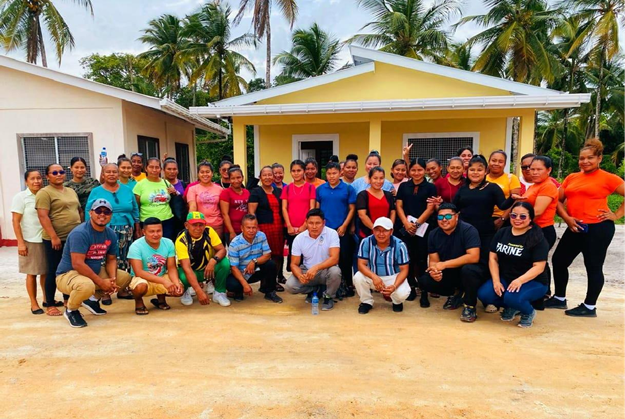
- Ten (10) villages completed VSP workshops and validation meetings, with additional communities actively engaged in the process.
- A VSP Unit was established within the NTC Secretariat to support sustainable village development.
- Training conducted for NTC staff and meetings held with NTC Executives.
- An FPIC Working Group was established, along with the hiring of an FPIC Consultant, to strengthen processes on Free, Prior, and Informed Consent (FPIC) and ensure alignment with national policies and international best practices.
Communication Tools Developed
- VSP Manual
- Fact Sheet
- Monitoring and Evaluation Tool
- Posters
- Presentation Slide Deck