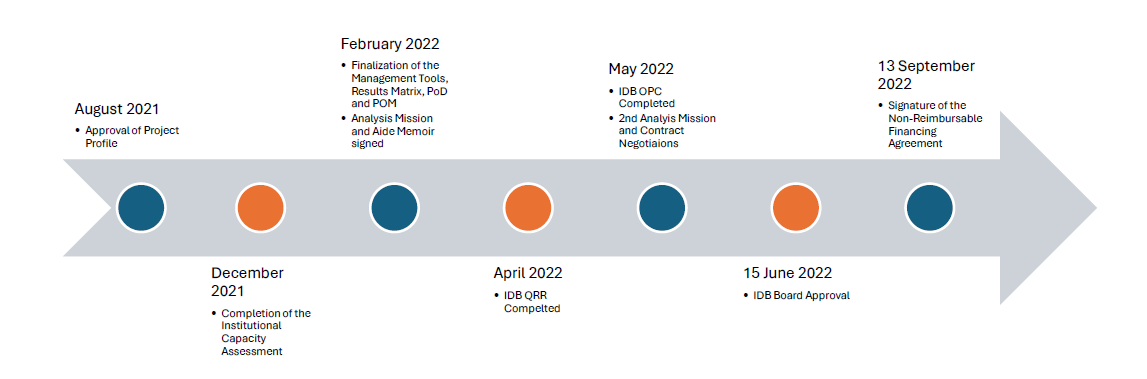



Timeline

Project Status & Information
Target
Target Capacity Development

Background
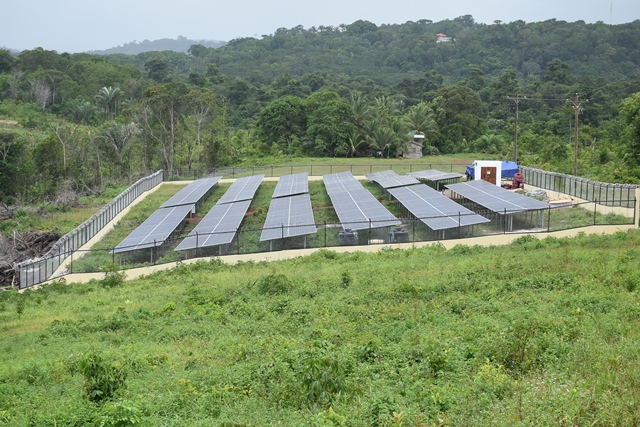
The Guyana Utility-Scale Solar Photovoltaic Program (GUYSOL) is part of a broader initiative aimed at diversifying Guyana’s energy matrix towards the use of climate-resilient renewable energy (RE) sources in the electricity generation matrix. GUYSOL represents a significant step towards sustainable energy development in Guyana. The specific objectives of the program are to:
1 . Construct 33MWp of Solar PV Farms with an associated 34MWh of Battery Energy Storage Systems (BESS) as follows:
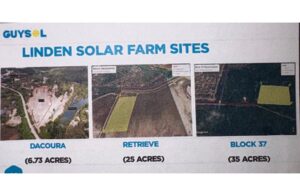
- Linden – 15MWp of Solar PV with 22MWh of BESS across three (3) sites: Block 37 (Millie’s Hideout), Retrieve, and Dacoura.
- Essequibo – 8MWp of Solar PV with 12MWh of BESS on the Essequibo Coast across two (2) sites: Onderneeming, and Charity (South Cozier Canal)
- Berbice – 10MWp of Solar PV in East and West Coast Berbice across three (3) sites: Trafalgar (WCB), Prospect (ECB), and Hampshire (ECB).
Each facility will be connected to the 13.8 kV primary distribution network in its respective area. Not only will this component diversify the energy matrix by incorporating renewable energy sources, but it will also displace the use of fossil fuels for electricity generation, thus contributing to climate change mitigation by reducing CO2 emissions. This development represents Guyan’s first utility-scale solar PV and BESS investment and mark a significant milestone in the country’s renewable energy transition.
Under Component 2, “Operation Efficiency, System, and Capacity Building,” focus is on enhancing efficiency and management of the isolated systems in Essequibo and Linden, while fostering inclusivity and capacity building within the renewable energy sector, particularly among women and underrepresented groups. Specifically, Component 2 includes:
- Upgrades and digital modernization of the isolated Essequibo and Linden electrical systems through energy management applications. This involves the installation of automated monitoring and control systems, remote control systems for substations, and the development of a Disaster Risk Management Plan for flood-prone sites.
- Support for the development of Energy Management Systems on the isolated systems of Essequibo and Linden power grids, as well as GPL’s overall system digitalization. This includes financing for hardware and/or cloud services, such as servers, networking devices, and field devices, along with software components and necessary communications protocols integrated into the power plant’s final designs.
- Gender and diversity-specific actions aimed at promoting inclusivity within the renewable energy sector in Guyana. This includes training programs for women in solar PV, Solar Job and Workforce Development (SJWD), with paid apprenticeship opportunities, as well as the design and implementation of apprenticeship programs for diversity and inclusion within the Project Executing Unit in GPL and other Government Energy Agencies.

Results
Summary of Project Progress (Status as of March 2026)
The Guyana Utility Scale Solar Photovoltaic Programme (GUYSOL) continued to demonstrate strong implementation progress to date, building on the significant milestones achieved in 2025. The programme remains on schedule to achieve its development objectives and reflecting steady implementation and timely delivery of major outputs.
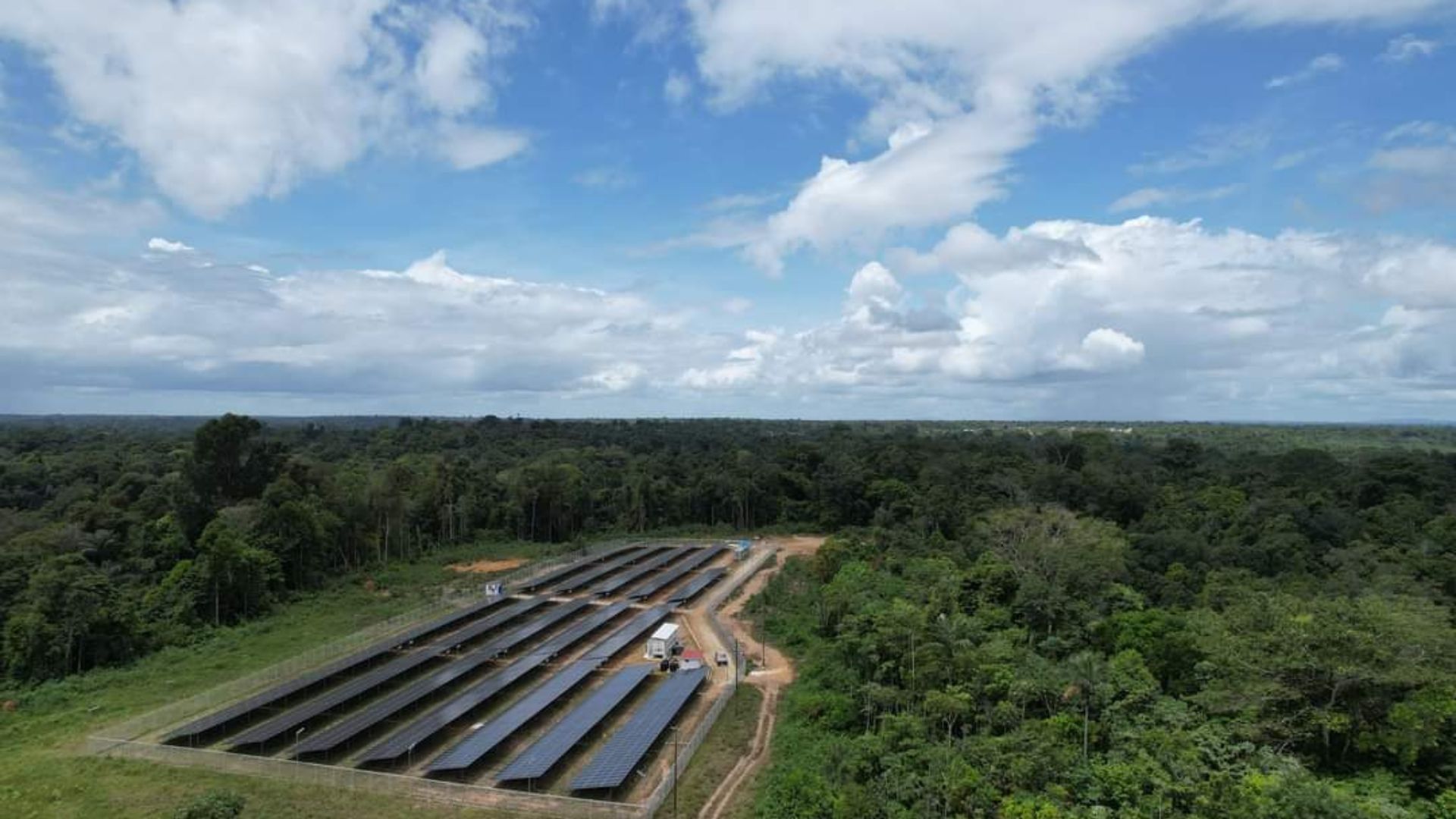
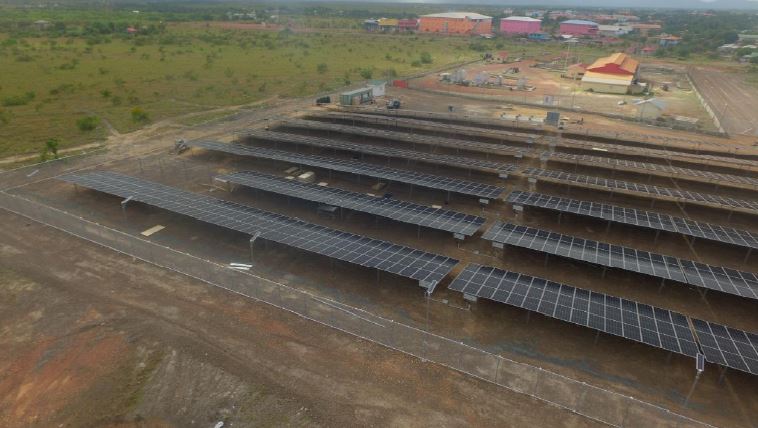
To date the GUYSOL project has delivered five (5) utility-scale solar photovoltaic facility completed under the programme, a major milestone achievement . This achievement increased GUYSOL’s total installed capacity to 18 MWp, representing 55% of the programme’s target of 33 MWp, with five of the planned eight solar farms now operational across Regions 2, 5, and 6.
Commissioned Solar Farms
Solar Farm | Region | Capacity (MWp) | Commissioned | Annual Generation | Annual CO₂ Reduction | Fuel Savings / Cost Avoided |
|---|---|---|---|---|---|---|
Onderneeming | Region 2 | 5 | 2 Nov 2025 | ~7,700 MWh | ~6,000 tCO₂ | ~GY$447M annually |
Hampshire | Region 6 | 3 | 21 Nov 2025 | ~4,800 MWh | ~3,200 tCO₂ | ~GY$210M annually |
Prospect | Region 6 | 3 | 6 Dec 2025 | ~4,800 MWh | ~3,200 tCO₂ | ~GY$210M annually |
Trafalgar | Region 5 | 4 | 13 Dec 2025 | ~6,000 MWh | ~4,000–5,000 tCO₂ | Avoids ~1.3M litres diesel; ~GY$300M annually |
Charity | Region 2 | 3 | 16 Jan 2026 | ~4,600 MWh | ~3,500 tCO₂ | ~GY$267M annually |
Implementation also continued on Lot 2 (15 MW, Linden), where construction activities progressed through pile testing and preparatory civil works, while institutional arrangements between GPL and LECI advanced in preparation for commissioning. These investments remain central to achieving Guyana’s target of increasing renewable energy’s share of the national electricity mix to 19% by 2026.
Collectively, the commissioned solar farms are already delivering measurable development benefits through significant reductions in greenhouse gas emissions, substantial annual savings in diesel fuel costs, improved grid resilience, enhanced energy security, and increased access to reliable electricity for households, businesses, schools, and health facilities. The programme also continues to advance Guyana’s commitments under the Low Carbon Development Strategy (LCDS) 2030, Nationally Determined Contributions (NDCs), and GRIF climate objectives.
Beyond infrastructure delivery, GUYSOL has maintained a strong emphasis on institutional strengthening and workforce development. During the reporting period, implementation continued for the Women in Solar PV Programme, with a second training cohort commencing in February 2026, alongside ongoing apprenticeship programmes designed to expand technical skills and increase female participation in Guyana’s renewable energy sector. Technical assistance under the GUYSOL Technical Cooperation also strengthened GPL’s institutional capacity through specialized training in commissioning, system operations, risk management, and leadership, complemented by continued international technical supervision and quality assurance.
Implementation Status
Indicator | Target | Status (Q1 2026) | Assessment |
|---|---|---|---|
Installed Solar Capacity | 33 MWp | 18 MWp | 55% delivered – On track |
Solar Farm Sites | 8 | 5 operational | Strong progress |
Battery Energy Storage | 34 MWh | Partial deployment | In progress |
Regional Coverage | 4 Regions | 3 Regions active | Region 10 underway |
Programme Completion | August 2027 | Within schedule | On track |
Overall, GUYSOL continues to translate infrastructure investments into tangible economic, environmental, and social benefits. The programme is making a significant contribution to diversifying Guyana’s energy mix, reducing greenhouse gas emissions, lowering electricity generation costs, strengthening national energy security, and building the institutional and technical capacity required to support a resilient, sustainable, and low-carbon energy sector.
Status Update (–)
The GUYSOL Project, under the Guyana-Norway Partnership, continues to advance Guyana’s renewable energy capacity. As of June 2025, the Program Execution Unit is fully operational, guided by the Program Operations Manual approved in March 2023.
By June 2025, the construction of solar projects in Berbice and Essequibo are well advanced, while the third solar farm at the Linden site was just getting underway since contract signing in May 2025.
With a focus on capacity building and empowerment, the training firm procurement had been completed, and the first batches of apprentices, including the Women in Solar Apprenticeship Program, commenced hands-on PV training, with the target of 50 women enrolled and acquiring technical skills for solar farm operations.
The Disaster Risk Management (DRM) Plan is also in its final stages, developed following the Inter-American Development (IDB) Disaster and Climate Change Risk Assessment Methodology, to guide preparedness, response, and recovery for all solar farm sites. The DRM Plan will be integrated into the Environmental and Social Management Plan (ESMP) to ensure compliance with national and international standards.
Together, these achievements demonstrate the project’s commitment to strengthening local capacity, fostering an inclusive workforce, enhancing infrastructure resilience, and expanding Guyana’s renewable energy sector in a sustainable, climate-resilient manner.

Linden poised for major power relief as gov’t rolls out GUYSOL Solar Project
A massive reduction in electricity costs is on the horizon for Linden as the Government of Guyana is moving swiftly to advance the Guyana Utility Scale Solar Photovoltaic Programme (GUYSOL) in region 10 (Upper Demerara-Upper Berbice) —a landmark initiative US$83 million renewable energy investment. Read More: https://guyanachronicle.com/2026/01/20/linden-poised-for-major-power-relief-as-govt-rolls-out-guysol-solar-project/

Women trained for jobs in Guyana’s expanding solar energy sector
As the government moves to expand renewable energy across Guyana through large-scale solar projects, women are being equipped with the skills needed to take on technical roles within the rapidly growing sector. The initiative is part of a broader push to build local capacity while promoting gender inclusion in non-traditional

GUYSOL solar programme powering jobs and inclusion in Guyana
The Guyana Utility Scale Solar Photovoltaic (GUYSOL) Programme is not only cutting emissions and expanding clean power, it is also opening up new jobs and training opportunities for youth, women and persons with disabilities across the country. Read more: https://dpi.gov.gy/guysol-solar-programme-powering-jobs-and-inclusion-in-guyana/

Photos
Title
|
File
|
Size
|
Type
|
Last Modified
|
|---|---|---|---|
|
6 MB
|
pdf
|
Feb 09, 2024
|
|
|
3 MB
|
pdf
|
Feb 09, 2024
|
|
|
2 MB
|
pdf
|
Feb 09, 2024
|
|
|
644 KB
|
pdf
|
Feb 09, 2024
|
|
|
543 KB
|
pdf
|
Feb 09, 2024
|